Introduction:
As of 2025, one of the attire ways to build your brand, boost traffic, and widen your business’s online presence is to rank highly on Google. contempt the increase of social media platforms and AI-powered search highlight, Google continues to be the most popular search engine used by billions of people when they are looking for information, products, or services.
Ranking on the first page, notably in the top three results, considerably increases your chances of getting clicks, generating leads, and generating revenue. As searchers develop more discerning and search results become more competitive, ranking highly in search results is becoming more than just a nice-to-have.
Given the vogue of voice search, AI assistants, and highly customised digital experiences, some people might wonder if traditional SEO is still relevant in 2025. The solution? Of course.
With more than 8.5 billion searches processed daily, Google continues to be the most widely used search engine. It is more effective than ever to rank #1 on Google with this level of activity. Actually Between 28% and 35% of all clicks go to the top-ranked result.
Merely 0.63% of users reach the second page. You could lose thousands of visits if you were ranked #1 in a position that was only number five. Being found on Google increases traffic, leads, and ultimately revenue for bloggers, business owners, and digital creators.
* Keyword Research – The Foundation of SEO
Researching keywords is the first and most crucial step in any successful SEO (Search Engine Optimization) strategy. It involves determining which search terms and phrases people use to locate products, services, or information related to your business or website.If SEO were a house, keyword research would be its blueprint. You need to decide what your cult wants before you start creating content.
✅ How to Perform Effective Keyword Research in 2025:
Utilise Your Tools Wisely:
- AnswerThe open, Ubersuggest, and Google Keyword Planner are all free.
- Paid: Ahrefs, SEMrush, and Surfer SEO
- Be Aware of purpose: Google’s algorithms are now capable of distinguishing between different types of search intent.
- The article “How to grow indoor plants” is educational.
- The navigation key is “Ahrefs login.”
- “Online SEO course purchase” is the transactional term.
- Target Long-Tail Keywords: These are elongated, more targeted queries with less competition and a higher transformation rate.
- For example, replacement “best free SEO tools for bloggers 2025” for “SEO tools.”

* Competitive Analysis – Reverse-Engineer the SERP
Competing investigation helps you know what is ranking on Google for your target keywords and why. By looking at the content, structure, and SEO tactics of high-performing pages, you can identify what works and identify any gaps or chances. This helps you exceed your competitors and generate better, more targeted content.Competitive analysis is the process of examining who is already ranking for your target keywords on the Search Engine Results Page (SERP) and figuring out why. This step helps you reverse what works so you can develop a more intelligent SEO strategy and improve your own ranking chances.
✅ The Methods Used in Competitive SEO Analysis:
Your Google Target Keyword:
Look at the top three to five organic results. Look at:
- article’s length
- Content arrangement (headings, pictures, bullet points)
- Title and meta description
- Making use of both internal and external connections
Utilise SEO resources:
You can see the following with tools like Ahrefs Content Gap, Surfer SEO, or SEO Minion:
- Keyword density
- There are gaps in some of the content.
- Techniques for internal linking
- Find Gaps & Opportunities: Enquire
- Could you provide me with more recent details?
- Could you make it easier to read or more engaging?
- Is there a picture or video missing?
* Content Optimization – Write to Rank

Content optimization ranking is the progress of improving your website content to make it more search engine friendly and expensive to readers. Once the right keywords have been chosen, the goal is to naturally incorporate them into important principles like the page title, headings, meta descriptions, and the content body. Though, writing to rank requires more than just keyword placement it also requires creating high-quality, relevant content that aligns with the user’s search purpose.
✅ Content Creation Techniques for SEO Success:
Arrange Your Content:
- Use h1 for the heading, h2 for correction, and h3 for sub-points.
- To disband the text, use counters, lists, and little paragraphs.
Use Your Keyword Wisely:
- Within the heading
- Inside the URL
- In the first 100 words
- The image’s alt text
- The meta description
Write for Readers and Make It Google-Friendly:
Don’t write algorithmic text in an automated way. Write to help real people solve real problems.
Exhibit E-E-A-T:
- skills: useful case studies or real-world examples.
- skills: Back up allegations with facts or sources.
- mention plausible sources to prove your expert.
- Trust: To give pages with author biographies, contact information, and privacy policies.
* On-Page SEO – Technical Tuning
“On-page SEO” refers to the process of optimizing subjective web pages to improve user experience and improve search engine rankings. While content optimization focuses on the written word, technical tuning includes the backend elements that make your pages easier for users and search engines to access and understand.
✅ Key On-Page SEO Elements to regard:
- Page Speed: Use Google PageSpeed Insights to assess and improve load time. Try to keep it under three seconds.
- Mobile Optimisation: sensitive design is crucial because over 60% of all searches are conducted on mobile devices.
- HTTPS (Security): Make sure an SSL certificate is being used on your website. Secure websites are preferred by Google.
- spotless URL Structure: Make sure your URLs are keyword-rich, concise, and easy to read.
- For example, yourdomain.com/seo-strategy-2025
- Use Schema Markup: Add building data to rich snippets (like star ratings and prevalence asked questions) to make them more noticeable.
* Off-Page SEO – Building Authority Through Backlinks
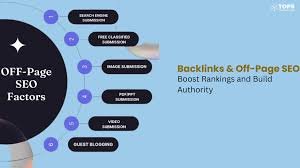
Off-page SEO is everything you do that has an effect on your search engine rankings but does not take place on your own website. The most proud and strong aspect of off-page SEO is creating backlinks, or links from other websites focusing on your content. Like “votes of trust,” backlinks from other websites let search engines understand that your content is conclusive, relevant, and reliable.
✅ Smart Link-Building Strategies for 2025:
Guest blogging:
- To give specialised websites with backlinks pointing to your content.
- assist a reporter Out (HARO): to give scholars’ belief to reporters in swap for backlinks.
- Create Content That Is Valuable for Links:
- original information or study
- Interactive tools or calculators
- Infographics and optical summaries
- Build Relationships, Not Just Links: Reach out to industry bloggers and sway via LinkedIn, X (Twitter), and email outreach.
* Track, Analyze & Improve – SEO is Ongoing

Rather than a one-time event, SEO is a current process. After your plans are situate into action, it’s key to keep an eye on performance, impose data, and make necessary adaptation. This final step assures that your SEO efforts stay ranking as user behavior changes, competition rises, and search engine algorithms change.
✅ Tools for Tracking SEO Development:
- Google Search Console: trails keyword rankings, technical issues, and impress.
- Google Analytics: watch user actions, to out rate, and session length.
- Tools for rank tracking: SERPWatcher and Ubersuggest are two examples of tools that can be used to track keyword movement.
- redesign Frequently: Replace any outdated information or links.
- Improve the meta descriptions and titles.
- Add new sections as needed.
Common Mistakes to Avoid
It will be more important than ever to rank #1 on Google in 2025. As search gets more competing, people’s immersion spans get shorter, and AI-driven results improve, businesses that don’t optimize well risk falling after. However, many websites still make major SEO mistakes that less their chances of showing extremely in search results.
Avoid these errors as they may lower your ranking:
- Keyword stuffing: Using your keyword too much will collapse.
- Thin Content: messengers with less than 500 words and little value are rarely ranked.
- Bad UX (User Experience): Pop-ups, shoddy mobile location design, and hard-to-read fonts turn off users.
- Spammy Backlinks: Steer clear of buying links from PBNs or subpar directories.
- Ignoring Mobile: If your website isn’t sensitive, Google will penalise you.
Final Thoughts: SEO in 2025 and Beyond
As 2025 advances, search engine optimization continues to evolve rapidly due to advancements in artificial intelligence, changing user behavior, and ongoing updates to search engine algorithms. However, the importance of providing value, relevance, and a first-rate user experience remains steady. Today, a digital marketing expert must focus on understanding search intent, producing trustworthy content, and ensuring technical soundness across all devices—factors that are more crucial than simply concentrating on keywords and backlinks.
The SEO landscape is not going away, notwithstanding its progress. Even though search engines are altered by AI, machine literacy, and shifting user actions, the elements of SEO remain the same:
- Help users with their problems.
- Offer excellent content.
- develop trust and credibility.
- More than just traffic is required to rank #1 on Google; authority, visibility, and growth are also important.